Introduction
In an era where flexibility and responsiveness are key to industrial success, modular industrial automation types emerged as a game-changer. Businesses are increasingly moving away from rigid, fixed systems toward scalable solutions that can adapt to changing production demands. Modular automation systems, made up of reconfigurable and interoperable building blocks, enable this shift—offering companies greater control, lower risks, and better return on investment.
This article explores the different industrial automation types, how they support scalable operations, and the benefits they offer across various industries.
What Is Modular Industrial Automation?
Modular industrial automation refers to systems composed of interchangeable and reconfigurable modules—each performing specific functions within a larger automated workflow. These systems are designed for quick integration, flexibility, and minimal downtime when updates or adjustments are needed.
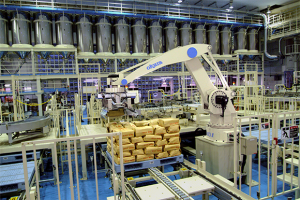
Unlike traditional automation, which often requires major reengineering for even minor changes, modular systems allow components such as robotic arms, conveyor modules, sensors, and software units to be swapped or expanded with ease. This approach supports both scalability and adaptability, two critical factors in Industry 4.0 environments.

Types of Modular Industrial Automation
There are several types of automation within the modular framework, each suited for different levels of production complexity and flexibility.
1. Fixed Automation
Fixed automation involves dedicated equipment configured for a single task or product. It offers high throughput and efficiency for mass production but lacks flexibility.
Example: Traditional automotive assembly lines with rigid robotic welders.
2. Programmable Automation
Programmable automation allows for reprogramming of equipment to accommodate batch production of different products. While the hardware setup remains largely fixed, control programs can be changed.
Example: CNC machines that can be reprogrammed for different part geometries.
3. Flexible (Soft) Automation
Flexible automation combines programmable control with equipment that can handle a variety of tasks. Systems can automatically switch between products or operations with little manual intervention.
Example: Robotic cells that adapt grippers and motions based on product variation.
4. Integrated Modular Automation
This is the most advanced form, where hardware and software modules are seamlessly integrated. These systems are fully scalable, support plug-and-play capability, and often include remote monitoring and AI-driven optimisation.

Advantages of Modular Automation
Modular automation systems offer a host of operational benefits:
- Scalability: Easily expand or downsize based on production needs.
- Cost-Efficiency: Phased investments reduce upfront capital outlay.
- Minimal Downtime: Faster upgrades and repairs with module swaps.
- Rapid Customisation: Adapt systems for new products without complete redesigns.
- Simplified Maintenance: Faults are easier to isolate, and replacement is quicker.
Industry Applications
Modular automation is widely applied across sectors where flexibility and speed are essential:
- Food & Beverage – Modular bottling, filling, and packaging lines that adapt to different SKUs and batch sizes.
- Automotive – Reconfigurable cells for welding, assembling, and quality inspection.
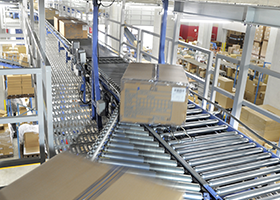
- Warehousing & Logistics – Custom conveyor layouts, sorting robots, and scanning systems that scale with volume.
- Pharmaceuticals – Rapidly deployable production modules with validated, repeatable processes.
Factors to Consider When Choosing a Modular Automation Type
Before implementing a modular system, consider the following:
- Product Diversity: The more varied your products, the more flexible your automation should be.
- Production Volume: High-volume environments may still benefit from fixed modules for consistency.
- Integration Requirements: Ensure compatibility with legacy systems or other automation tools.
- Workforce Skill Level: Modular systems may require higher technical proficiency for configuration and troubleshooting.
- Support and Maintenance: Choose partners that offer lifecycle support, from design to training and servicing.
Conclusion
Modular industrial automation is no longer a future concept—it’s a present-day necessity for companies seeking operational resilience, adaptability, and scalability. Whether you’re looking to modernise a single production line or build an entirely new facility, modular systems offer the building blocks to grow efficiently and strategically.
At Okura Singapore, we design and deliver tailored modular automation solutions that align with your production goals and operational realities. Get in touch with our team to explore how modularity can drive your next phase of industrial growth.