Introduction
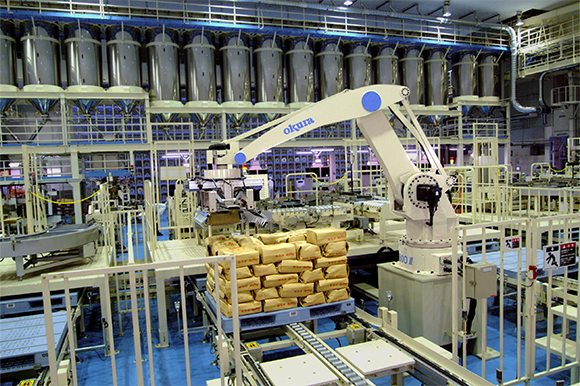
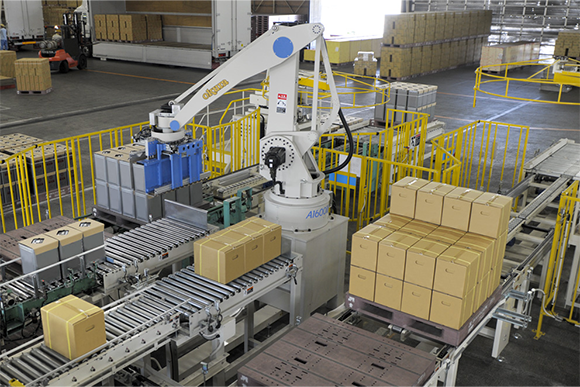
Traditional robot pallet systems were once limited to repeating fixed patterns and handling uniform boxes. However, modern warehousing and manufacturing environments have shifted sharply. Businesses now face SKU proliferation, increasingly short production runs, rising labour costs, and the need for 24/7 throughput.
As a result, robotic palletizing technologies are rapidly becoming more advanced, intelligent, and versatile. AI-driven algorithms, vision systems, and smart stacking tools are reshaping how companies build stable, transport-ready pallets—with greater speed, precision, and flexibility than ever before.
This article explores the biggest trends that will define the next decade of robot pallet solutions.
AI-Powered Robot Palletizing: Smarter and More Adaptive
AI-Driven Layer Planning
Modern AI engines can analyse product dimensions, packaging materials, and stacking rules to generate the most efficient pallet pattern automatically. Instead of relying on pre-set templates, AI adjusts the pattern dynamically based on incoming product variations.
Benefits include:
- Optimised pallet density
- Reduced transport cost per pallet
- Better use of warehouse space
- Faster changeovers for mixed-SKU operations
Predictive Load Stability
AI can predict how a pallet might shift or collapse based on weight distribution, product fragility, and stacking angles. It can then modify the pattern—adding columns, alternating layers, or reinforcing corners—to prevent instability.
Self-Learning Robots
Robots equipped with machine learning continuously refine how they pick, place, and stack items. Over time, they learn ideal gripper pressure, detect common misalignments, and automatically make micro-adjustments—improving both speed and accuracy.
Vision Systems: The Eyes of the Modern Robot Pallet
Advanced 2D and 3D Vision
Integrated cameras and sensors allow the robot to identify product shape, orientation, colour, and label positioning. This enables:
- Accurate picking of skewed or irregular boxes
- Real-time measurement of dimensions
- Automatic detection of damage before stacking
Error Recovery and Auto-Correction
If products arrive misaligned on the conveyor, a vision-guided robot pallet can correct the position automatically—reducing downtime and manual intervention.
Enhanced Traceability
Vision systems can scan barcodes and serial numbers during palletizing, ensuring the right products are packed together. This is especially valuable for food, FMCG, and pharmaceutical operations where traceability is mandatory.
Smart Stack Optimization: Building the Perfect Pallet
Algorithm-Based Pattern Generation
Next-generation palletizing software uses optimisation algorithms to generate thousands of potential stack patterns in seconds. It then selects the most efficient option that meets:
- Load stability requirements
- Transport constraints
- Customer-specific pallet configurations
Real-Time Load Monitoring
Embedded sensors track weight as each case is placed. If the system detects imbalance, it instantly adjusts the next placements—ensuring a structurally sound pallet.
Mixed-Case and Retail-Ready Pallets
Smart stacking tools allow robots to handle different shapes, materials, and packaging types. This capability is crucial for retailers who need store-ready pallets that reflect shelf layout.
Digital Twins and Virtual Commissioning
Digital twin technology allows engineers to simulate a robot pallet cell virtually before it is installed. This results in:
- Faster commissioning
- Accurate throughput predictions
- Better equipment layout design
- Reduced risk during deployment
Companies can also test future SKU changes or batch variations without interrupting operations.
IoT Connectivity and Predictive Maintenance
When robot pallet systems are linked to the cloud or a central monitoring dashboard, operators gain real-time insights into:
- Cycle counts
- Motor vibrations
- Gripper performance
- Maintenance intervals
- Wear and tear predictions
Predictive maintenance ensures maximum uptime and lower long-term operating costs.
How These Trends Support Singapore Industries
Industries across Singapore—such as FMCG, logistics, distribution centres, electronics, and pharmaceuticals—are adopting smarter robot pallet solutions to:
- Reduce manpower dependency
- Increase order fulfilment speed
- Improve accuracy and product protection
- Scale operations sustainably
These future trends align with Singapore’s Industry 4.0 vision, helping companies remain competitive in an increasingly automated global landscape.
How Okura Singapore Supports the Future of Palletizing
Okura Singapore integrates advanced technologies across its robot pallet solutions, offering:
- AI-ready palletizing software
- Vision-guided robotic systems
- Smart conveyor integration
- Custom end-of-line automation
- Local commissioning, maintenance, and lifecycle support
With deep expertise in material-handling automation, Okura provides forward-looking systems that help businesses adapt to rising demand and operational complexity.
Conclusion
Robot pallet technologies are becoming more intelligent, more autonomous, and more adaptable. AI, machine vision, and smart stack optimisation will shape the next decade of palletizing innovation, helping companies achieve higher throughput, better accuracy, and more stable pallets.
By investing in the right systems today, businesses can build a resilient, future-ready warehouse. And with Okura Singapore’s expertise in automation and system integration, companies can confidently embrace the next generation of palletizing solutions.