Introduction
In high-volume industries such as e-commerce, logistics, and manufacturing, efficiency depends heavily on how products move through a facility. A well-designed sorting conveyor plays a crucial role in maintaining order flow, reducing manual handling, and ensuring timely deliveries.
As operations scale, sorting conveyors must be built to handle thousands of items per hour with speed, accuracy, and reliability. Designing an effective system requires careful consideration of layout, capacity, materials, and control technologies. This article explores the essential factors to consider when developing a sorting conveyor for large-scale operations.
Understanding the Role of a Sorting Conveyor
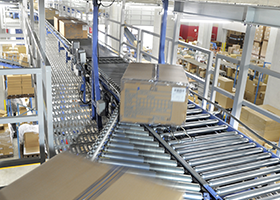
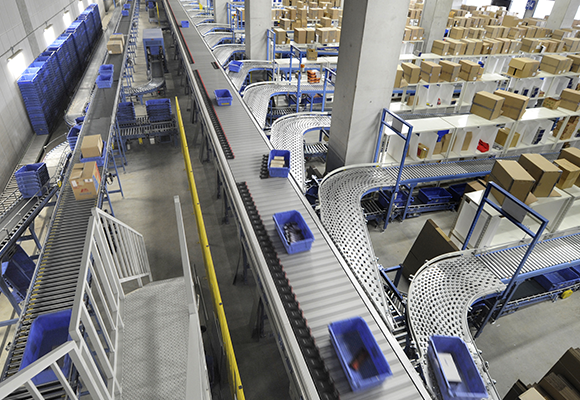
A sorting conveyor automatically routes items to designated locations within a warehouse or production line. These systems use a combination of sensors, scanners, and diverters to identify and direct products based on criteria such as destination, size, or weight.
Sorting conveyors are commonly used in:
- E-commerce fulfilment centres for parcel routing.
- Manufacturing plants for product classification or packaging.
- Food and beverage facilities for quality grading and sorting.
- Airport logistics for baggage handling systems.
The goal is simple: move the right item to the right place—efficiently, accurately, and continuously.
Key Design Considerations for High-Volume Operations
Designing a sorting conveyor goes beyond mechanical engineering—it’s about optimizing an entire workflow. Here are the primary factors to consider:
1. Throughput and Speed Requirements
The system’s throughput capacity determines how many items it can handle per hour. When designing for high-volume operations:
- Evaluate current and projected daily volumes.
- Factor in seasonal demand spikes.
- Balance conveyor speed with scanning and sorting accuracy—too much speed without proper control can lead to mis-sorts or damage.
2. Product Diversity and Size Range
High-volume facilities often handle items of varying shapes, weights, and fragility.
- Conveyors should support a wide range of product dimensions.
- Modular designs allow flexible adjustments for different item types.
- Specialized sorters, such as tilt-tray or cross-belt conveyors, can accommodate mixed product flows.
3. Space and Layout Optimization
Warehouse or facility space is often at a premium.
- Utilize multi-level or spiral layouts to maximize vertical space.
- Minimize transfer points to reduce product handling.
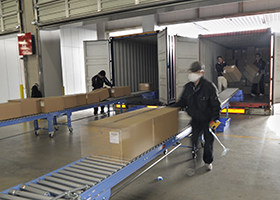
- Incorporate ergonomic loading and unloading stations to improve operator efficiency.
4. Sorting Technology Selection
Different sorting technologies are suited for different operational needs:
- Pop-up Wheel Sorters: Cost-effective for light parcels and cartons.
- Pusher Sorters: Simple and durable for medium-weight items.
- Cross-Belt Sorters: Offer high accuracy for diverse package sizes.
- Tilt-Tray Sorters: Ideal for fragile or irregularly shaped products.
Choosing the right technology ensures speed, accuracy, and low maintenance costs.
5. Integration with Automation Systems
A modern sorting conveyor must integrate seamlessly with warehouse automation infrastructure.
- WMS (Warehouse Management System): Provides order data and destination assignments.
- Barcode/RFID Scanners: Identify and track each product in real time.
- Industrial Control Systems: PLCs and HMIs coordinate sensors, motors, and diverters.
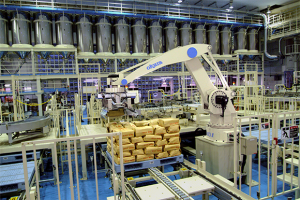
- Robotic Palletizing or Packing Lines: Automated systems downstream must align with sorting output.
Balancing Accuracy and Efficiency
In high-volume environments, every second counts—but accuracy must remain the top priority. Effective design should incorporate:
- Real-Time Monitoring: Track flow rates and identify jams or bottlenecks immediately.
- Feedback Systems: Automatically recalibrate sorting mechanisms based on performance data.
- Error Handling Logic: Direct unscannable or unreadable items to a rework lane without halting operations.
Precision sorting reduces rework, prevents shipping errors, and ensures customer satisfaction.
Durability and Maintenance Considerations
High-volume sorting conveyors operate for long hours under heavy loads, making durability a critical design factor.
- Use high-quality rollers, bearings, and belts rated for continuous duty.
- Select frame materials (steel or aluminium) suitable for the operating environment.
- Implement easy-access panels for maintenance and cleaning.
- Establish preventive maintenance schedules to minimize downtime.
Predictive maintenance tools—such as vibration monitoring and thermal sensors—can alert technicians before mechanical failures occur.
Energy Efficiency and Sustainability
As sustainability becomes a priority, designing energy-efficient systems offers both environmental and economic benefits:
- Use variable frequency drives (VFDs) to control motor speeds based on load.
- Implement zoned conveyors that power down idle sections.
- Opt for low-friction belts to reduce energy consumption.
- Integrate smart controls to optimize system performance in real time.
These measures lower operational costs while supporting corporate sustainability goals.
Scalability for Future Growth
High-volume operations evolve quickly. Future-ready designs ensure scalability by:
- Allowing for modular expansion without full system replacement.
- Including software platforms that can handle additional product data.
- Designing with flexibility to incorporate emerging technologies such as AI-driven routing or robotic integration.
A scalable system ensures long-term value and adaptability to changing business needs.
Conclusion
Designing a sorting conveyor for high-volume operations requires a careful balance of speed, accuracy, and durability. From choosing the right sorting technology to ensuring smooth system integration, each decision impacts performance, energy efficiency, and long-term reliability.
At Okura Singapore, we design and implement high-performance sorting conveyor systems tailored to the specific needs of logistics, manufacturing, and distribution facilities. Our solutions combine engineering precision with smart automation—helping businesses move products faster, safer, and more efficiently.