Introduction
Industrial automation is often associated with large corporations, advanced robotics, and massive capital investments. However, in today’s competitive market, small and medium-sized enterprises (SMEs) are also adopting automation to improve efficiency, reduce labour dependency, and maintain quality standards. Thanks to modular and scalable technologies, automation is no longer a privilege of large manufacturers—it’s a strategic necessity accessible to smaller players.
This article highlights practical industrial automation examples from SMEs and explores how these companies are using automation to increase productivity, lower costs, and remain competitive in fast-changing industries.
Why SMEs Are Turning to Automation
SMEs face many of the same challenges as large enterprises—labour shortages, rising costs, and the demand for faster production—but with smaller budgets and resources. Automation helps bridge that gap by enabling:
- Consistent Quality: Machines perform repetitive tasks with precision, reducing errors.
- Higher Output: Automated systems can run continuously, even with limited staff.
- Cost Efficiency: Reducing manual labour and waste lowers overall production costs.
- Workforce Safety: Automation reduces exposure to hazardous or physically demanding tasks.
- Scalability: Modular systems grow with the business, allowing step-by-step implementation.
The key for SMEs lies in adopting targeted, scalable automation solutions that deliver measurable results without requiring full-scale transformation.
Real-World Examples of Industrial Automation in SMEs
Let’s explore how SMEs across industries are successfully applying automation.
1. Manufacturing: Automated Assembly and Packaging
A small electronics manufacturer integrated collaborative robots (cobots) into its assembly line to handle repetitive soldering and packaging tasks. The result:
- 30% increase in throughput.
- Consistent soldering quality.
- Reduced fatigue and fewer errors among operators.
Cobots proved ideal for SMEs due to their compact size, affordability, and ease of programming.
2. Food and Beverage: Process and Quality Control
A mid-sized food producer installed automated filling and sealing machines integrated with weight sensors and temperature controllers. Automation ensured:
- Precise portioning, reducing material waste.
- Compliance with food safety regulations.
- Faster batch production with fewer staff.
Simple process automation solutions like this provide immediate ROI by improving accuracy and minimizing downtime.
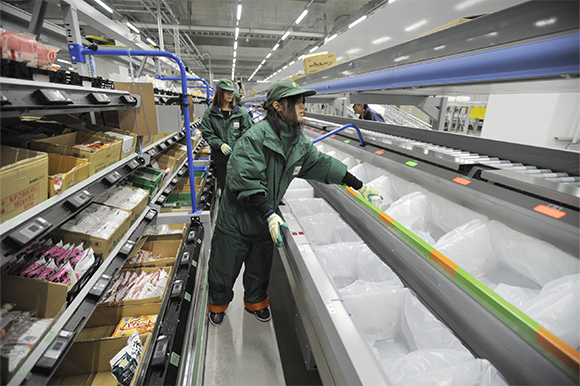
3. Warehousing and Logistics: Conveyor and Sorting Automation
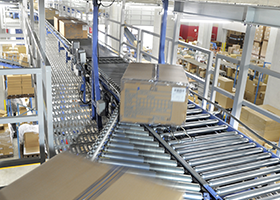
A logistics SME introduced a modular sorting conveyor to manage increased e-commerce demand. The system included barcode scanners and programmable diverters to automatically route parcels.
- Sorting speed increased by 45%.
- Manual handling reduced significantly.
- System easily scalable as order volumes grew.
This kind of incremental automation allows smaller logistics players to compete with larger distribution centres.
4. Printing and Packaging: Automated Stacking and Labeling
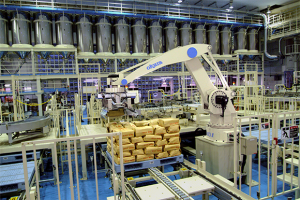
A packaging SME adopted robotic arms for stacking finished cartons and labeling products. The robots integrated seamlessly with existing conveyors and required minimal retraining for staff.
- Labour costs dropped by 20%.
- Error rates in labeling are nearly eliminated.
- Return on investment achieved in less than two years.
Automation not only improved output but also created safer, less strenuous working conditions.
Scalable and Affordable Automation for SMEs
One of the biggest misconceptions about automation is that it requires massive budgets. Modern industrial automation examples show that scalable, modular, and plug-and-play solutions make it accessible to businesses of all sizes.
Affordable Automation Options for SMEs:
- Low-Cost Robotics: Compact cobots and palletizing arms.
- Smart Sensors: For monitoring machine performance and quality metrics.
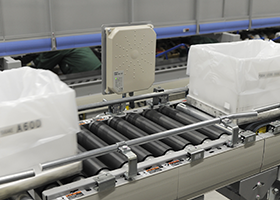
- Conveyor Systems: Simple motorized units for materials handling.
- Industrial IoT Platforms: Cloud-based data analytics to monitor operations remotely.
- Retrofit Solutions: Integrating automation into existing equipment to save cost.
These solutions can be introduced gradually—allowing SMEs to automate specific pain points before expanding further.
Overcoming Challenges in SME Automation
While automation offers significant benefits, smaller businesses face distinct challenges in implementation:
- Budget Constraints: Start with targeted automation that offers quick ROI.
- Lack of Expertise: Work with experienced integrators for design and training.
- Integration Complexity: Choose modular solutions compatible with existing systems.
- Change Management: Train employees to operate and maintain new systems confidently.
With the right planning and support, even small teams can manage automation efficiently and sustainably.
The Measurable Impact of Automation on SMEs
SMEs that adopt automation experience measurable performance improvements:
- Productivity Gains: Through continuous operation and reduced cycle times.
- Quality Improvements: Real-time data collection ensures consistent standards.
- Reduced Operational Costs: Automation lowers labour, waste, and maintenance costs.
- Improved Scalability: Businesses can meet growing demand without major restructuring.
These gains translate directly into profitability, allowing SMEs to compete on equal footing with larger players.
Conclusion
As these industrial automation examples demonstrate, automation is not just for global manufacturers—it’s a vital tool for SMEs striving to grow, compete, and innovate. By starting small, focusing on high-impact areas, and leveraging modular systems, small businesses can transform their operations without overextending their budgets.
At Okura Singapore, we help SMEs design and implement smart automation solutions tailored to their scale and industry needs. From conveyor systems to robotics integration, our goal is to make advanced automation practical, efficient, and future-ready for businesses of every size.
Contact us today to learn how automation can help your SME boost productivity, improve consistency, and stay ahead of the competition.