Introduction
The manufacturing industry is evolving rapidly as companies race to stay competitive in a globalised economy. Efficiency, flexibility, and precision are no longer optional—they are essential. At the heart of this transformation lies industrial automation and control, which combines hardware, software, and intelligent systems to optimise production processes.
From programmable logic controllers (PLCs) to advanced control strategies powered by artificial intelligence, today’s factories are smarter, more adaptive, and better equipped to handle complex demands. This article explores the fundamentals of industrial automation and control, the strategies that drive smart factory success, and the benefits businesses can expect when embracing these technologies.

What Is Industrial Automation and Control?
Industrial automation and control refers to the use of technologies and systems that reduce or eliminate manual intervention in industrial processes. These systems integrate machinery, electronics, sensors, and software to create reliable, efficient, and repeatable production.
Core components include:
- Control Systems (PLCs, DCS, SCADA): The “brains” that monitor, regulate, and optimise operations.
- Sensors and Actuators: Enable machines to interact with their environment by collecting data and executing commands.
- Human-Machine Interfaces (HMI): Allow operators to visualise and manage processes in real time.
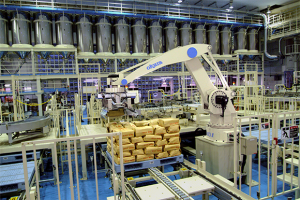
- Robotics and Mechatronics: Carry out repetitive or high-precision tasks with accuracy.
Together, these elements form the backbone of smart factories—highly automated environments where decisions are increasingly data-driven.
Advanced Control Strategies in Modern Automation
The success of industrial automation and control lies in implementing advanced strategies that go beyond traditional programming. Key approaches include:
- Model Predictive Control (MPC)
- Uses mathematical models to predict process outcomes.
- Optimises system performance by adjusting variables in real time.
- Commonly applied in energy-intensive industries like chemicals and oil & gas.
- Uses mathematical models to predict process outcomes.
- Adaptive Control
- Adjusts automatically to changing process conditions without manual reprogramming.
- Ideal for environments with variable inputs, such as food processing.
- Adjusts automatically to changing process conditions without manual reprogramming.
- Distributed Control Systems (DCS)
- Divide control functions across multiple nodes, improving resilience.
- Useful in large-scale manufacturing plants where reliability is critical.
- Divide control functions across multiple nodes, improving resilience.
- Supervisory Control and Data Acquisition (SCADA)
- Provides centralised monitoring and control across an entire facility.
- Enables integration of multiple automation layers into a single interface.
- Provides centralised monitoring and control across an entire facility.
- Artificial Intelligence (AI) and Machine Learning (ML)
- Enable predictive maintenance, anomaly detection, and autonomous decision-making.
- Improve process optimisation by analysing large volumes of operational data.
- Enable predictive maintenance, anomaly detection, and autonomous decision-making.
The Role of Data in Industrial Automation and Control
Data is the lifeblood of a smart factory. Sensors, machines, and control systems generate massive amounts of information every second. Advanced data strategies ensure that this information is not just collected, but also analysed and acted upon.
- Real-Time Monitoring: Operators can detect inefficiencies, bottlenecks, or safety issues instantly.
- Predictive Analytics: Historical data helps forecast potential failures before they occur.
- Closed-Loop Feedback: Systems automatically adjust based on live performance data, minimising human intervention.
Data-driven control improves visibility, supports informed decision-making, and ensures continuous optimisation.

Benefits of Industrial Automation and Control
Companies that invest in automation and advanced control strategies gain a wide range of benefits, including:
- Higher Productivity: Machines operate around the clock with minimal downtime.
- Improved Quality: Automated systems maintain precision, reducing defects.
- Operational Flexibility: Systems adapt quickly to product changes and customer demands.
- Energy Efficiency: Smart controls optimise motor speeds, reduce idle time, and manage power use effectively.
- Enhanced Safety: Risky tasks can be automated, reducing workplace hazards.
- Scalability: Systems can expand with production growth without significant reconfiguration.
Applications Across Industries
Industrial automation and control are widely adopted across multiple sectors:
- Automotive: Robotics and vision systems streamline assembly lines.
- Pharmaceuticals: Precision control ensures compliance with strict quality standards.
- Food & Beverage: Adaptive control supports flexible packaging and batch production.
- Electronics: High-precision assembly is enabled through advanced robotics.
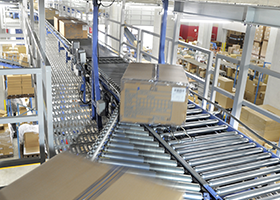
- Logistics & Warehousing: Automated conveyors and sorting systems improve throughput.
Challenges and Considerations
While the benefits are significant, companies must address several challenges:
- Integration Complexity: Merging legacy systems with modern automation requires careful planning.
- Cybersecurity Risks: Increased connectivity exposes systems to digital threats.
- High Upfront Costs: Advanced control technologies require initial investment, though long-term ROI is strong.
- Skill Gaps: Operators and technicians need training to manage advanced systems.
By working with experienced automation partners, businesses can overcome these barriers and unlock the full potential of smart manufacturing.
The Future of Industrial Automation and Control
The next wave of industrial automation will be defined by greater connectivity, autonomy, and intelligence. Concepts like Industrial Internet of Things (IIoT), edge computing, and AI-driven robotics will enable factories to operate with minimal human oversight while delivering unprecedented levels of efficiency.
Sustainability will also play a bigger role, with automation technologies designed to reduce energy consumption, material waste, and environmental impact.
Conclusion
Industrial automation and control are more than just technologies—they are strategies that define the success of modern smart factories. By implementing advanced control systems, leveraging real-time data, and adopting AI-driven approaches, companies can achieve greater efficiency, resilience, and adaptability in a competitive landscape.
At Okura Singapore, we specialise in delivering tailored automation and control solutions that empower businesses to thrive in the era of Industry 4.0. From system design to integration and ongoing support, our expertise ensures your factory is not only automated—but truly intelligent.