Introduction
In the era of high-speed logistics and smart warehousing, the need for precise and efficient product handling has never been greater. Automated sorting conveyor systems play a pivotal role in meeting this demand. These systems are designed to automatically identify, route, and distribute items to their correct destinations, enabling faster processing with minimal manual intervention.
This article explores the key design features that make an automated sorting conveyor system efficient, reliable, and adaptable for modern industrial applications.
What is an Automated Sorting Conveyor System?
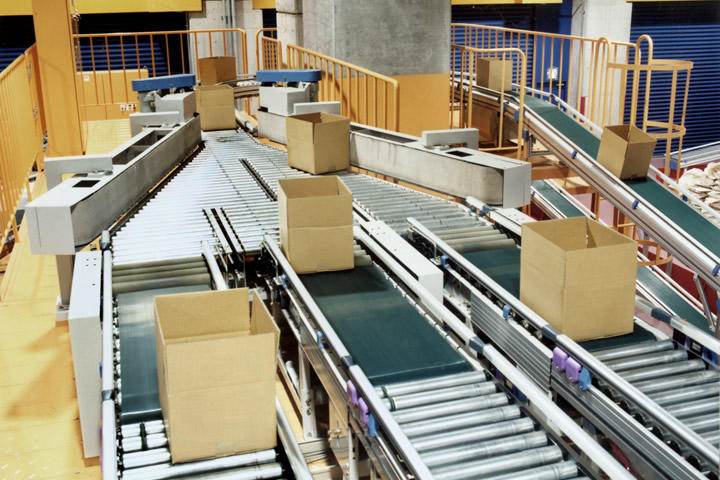
An automated sorting conveyor system is a mechanised solution that combines conveyor belts, sensors, scanners, diverters, and control software to route products accurately along designated paths. It eliminates the need for manual sorting, ensuring high throughput and accuracy in distribution centres, manufacturing facilities, and e-commerce operations.

Core Components of an Automated Sorting Conveyor System
- Conveyor Mechanism: The physical backbone of the system, conveyors transport items along predefined paths.
- Identification Technology: Bar code readers, RFID scanners, and vision systems capture data to guide sorting decisions.
- Diverter Mechanisms: These include pushers, belt transfers, pop-up wheels, and tilt trays that direct products to the correct lanes.
- Control System: PLCs and software platforms manage data, route logic, and system diagnostics.
- User Interface: Operator dashboards for system monitoring, troubleshooting, and manual overrides.
Key Design Features for Optimal Performance
- High-Speed Accuracy The system must identify and sort items rapidly without compromising precision. Accurate scanning and smooth transitions between modules are essential to avoid misrouting.
- Modular and Scalable Architecture A modular layout allows for incremental expansion. Businesses can scale capacity by adding new lanes or sorting modules without redesigning the entire system.
- Flexible Product Handling The system should handle various item sizes, shapes, and weights. Adjustable guides, configurable diverters, and smart software algorithms enable this versatility.
- Durable and Low-Maintenance Materials Using wear-resistant belts, high-quality rollers, and sealed electronics extends system longevity and reduces maintenance frequency.
- Smart System Integration Seamless integration with warehouse management systems (WMS) and enterprise resource planning (ERP) software ensures real-time tracking, order fulfilment, and reporting.
- Error Detection and Recovery Automated alerts and rejection lanes allow the system to detect anomalies (e.g., unreadable barcodes) and divert problematic items for manual inspection.
- Energy Efficiency Variable frequency drives (VFDs), smart motor controls, and power-saving modes optimise energy usage during low-load periods.
Applications Across Industries
- E-commerce Fulfilment: High-volume parcel sorting based on destination or order.
- Food & Beverage: Sorting packaged products by type, expiry date, or batch.
- Manufacturing: Segregating components for assembly lines.
- Postal and Courier Services: Automating the routing of mail and packages.
Factors to Consider During Design & Implementation
- Footprint & Layout: Design the conveyor path to fit available space while maximising flow.
- Product Mix: Understand the variety and characteristics of items being handled.
- Throughput Requirements: Calculate expected volume to ensure sufficient processing capacity.
- System Downtime Planning: Include bypass lanes or redundancy to maintain uptime during maintenance.
- Compliance & Safety: Follow safety standards and ergonomic practices for operator interaction zones.
Conclusion
An effective automated sorting conveyor system is more than just a moving belt—it’s a finely tuned integration of mechanical, electrical, and software technologies working in harmony. From precision sorting to real-time data tracking, each design feature contributes to the overall productivity and reliability of industrial operations.
At Okura Singapore, we design and deliver customised sorting conveyor systems engineered for performance, scalability, and integration. Whether you’re managing a high-volume e-commerce warehouse or a manufacturing distribution line, our systems provide the speed and precision you need.