Introduction
Industrial robotic automation has long been the backbone of manufacturing efficiency, streamlining processes and reducing manual labour. Traditionally, these systems relied on rigid programming and predefined tasks. However, the integration of artificial intelligence (AI) has propelled industrial robotics into a new era of adaptability and intelligence. AI is no longer just an add-on; it is a critical enabler that is fundamentally transforming how robotic systems operate within industrial environments.
This article explores how AI is leveraged in industrial robotic automation, the key benefits it delivers, and what it means for the future of smart manufacturing.
The Convergence of AI and Industrial Robotics
AI’s influence in industrial robotics centres on enabling machines to make autonomous decisions, learn from their environment, and optimise operations without human intervention. When paired with advanced sensors and machine vision systems, AI transforms traditional robots into intelligent agents capable of interpreting data and adjusting behaviours in real time.
Key AI Functions in Robotic Automation:
- Machine Learning: Robots can analyse historical data to identify patterns and improve task performance over time.
- Computer Vision: AI-powered vision systems enable precise object recognition, quality inspection, and dynamic navigation.
- Natural Language Processing (NLP): Allows human operators to interact with robots using voice or text commands.
- Reinforcement Learning: Robots learn through trial and error, adjusting actions based on feedback to optimise outcomes.
This convergence has given rise to collaborative robots (cobots), autonomous mobile robots (AMRs), and smart robotic arms that operate seamlessly alongside human workers.
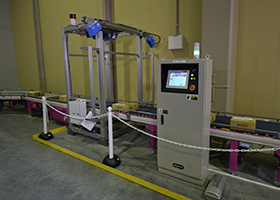
Key Applications of AI in Industrial Robotics
AI-enhanced robotics are being deployed across various sectors, delivering measurable improvements in efficiency, quality, and safety.
1. Smart Assembly Lines
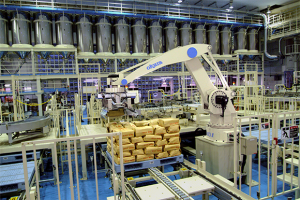
Robotic arms use computer vision and AI algorithms to adapt to component variations and align parts with greater accuracy, reducing defect rates and rework.
2. Predictive Maintenance
AI analyses operational data from robotic systems to detect anomalies and predict potential failures before they occur, minimising unplanned downtime.
3. Autonomous Material Handling
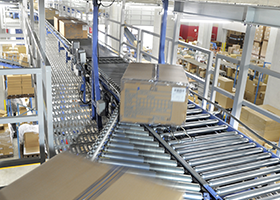
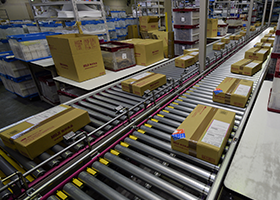
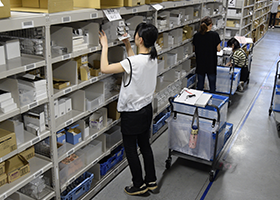
AI-driven AMRs navigate dynamic warehouse environments, avoiding obstacles and optimising routes in real time for efficient goods movement.
4. Quality Control and Inspection
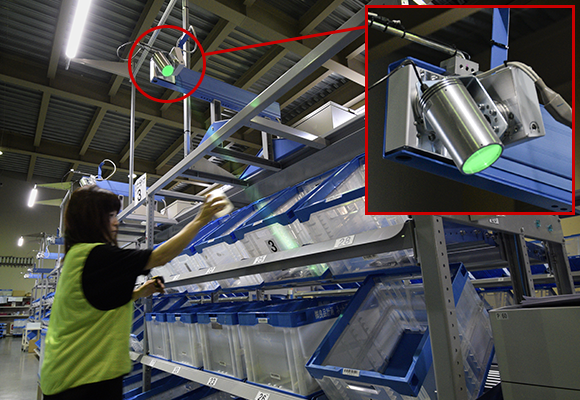
Machine vision systems powered by AI inspect products for defects with high speed and accuracy, ensuring consistent quality across production lines.
5. Human-Robot Collaboration
Cobots equipped with AI adapt their operations based on human behaviour, ensuring safety and seamless interaction on the factory floor.
Benefits of Integrating AI into Robotic Automation
The use of AI in industrial robotic automation is not just about improving individual tasks; it’s about creating intelligent, interconnected systems that adapt, learn, and evolve.
1. Increased Flexibility
AI allows robotic systems to switch between tasks with minimal reprogramming, enabling high-mix, low-volume production lines.
2. Enhanced Productivity
Real-time optimisation of processes and autonomous decision-making leads to faster cycle times and reduced bottlenecks.
3. Improved Safety
AI-powered sensors and algorithms help robots detect and avoid hazards, ensuring safer working environments for humans.
4. Scalable Intelligence
Once an AI system learns a process, it can be replicated across multiple robots or sites, accelerating deployment across operations.
5. Data-Driven Insights
AI enables continuous data collection and analysis, providing actionable insights for process improvement and strategic planning.
Challenges and Considerations
Despite its benefits, integrating AI into industrial robotics comes with its share of challenges:
- Data Quality and Availability: AI models require large volumes of clean, high-quality data to function effectively.
- Integration Complexity: Retrofitting AI into existing systems may require hardware upgrades and custom software development.
- Cybersecurity Risks: Increased connectivity and data exchange necessitate robust security measures to protect sensitive information.
- Skilled Workforce: Operators and engineers must be trained to work with AI-powered systems, which may require significant upskilling.
Future Outlook
The future of industrial robotic automation lies in hyper-connected, intelligent systems capable of autonomous decision-making. Emerging technologies such as generative AI, edge computing, and 5G connectivity will further enhance the capabilities of robotic systems.
Expect to see:
- Self-programming Robots: Using AI to generate task routines without manual coding
- AI-Powered Swarm Robotics: Coordinated fleets of robots working collectively for large-scale tasks
- Digital Twins: Virtual models powered by AI for real-time simulation and optimisation
Conclusion
Artificial intelligence is driving a paradigm shift in industrial robotic automation. From smart assembly lines to autonomous quality inspection, AI empowers robotic systems with the ability to adapt, learn, and make decisions. For manufacturers, this translates into enhanced flexibility, productivity, and competitiveness in an increasingly dynamic industrial landscape.
As AI continues to evolve, businesses that embrace its potential in robotic industrial automation will be better positioned to lead in the era of Industry 4.0 and beyond.